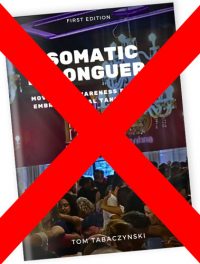
Save Yourself the Trouble of Reading this Book!
„Much Ado About Nothing“
After spending days engaging intensively with this book — working through its content, summarizing it, asking the author questions, and eventually writing three articles of my own — I had to realize at some point that a large part of this work had basically been for nothing.
And yet it was not wasted.
Because engaging with such a radical position has once again made very clear to me what good teaching actually involves: not simply transmitting forms, but creating understandable connections, regulating complexity, setting meaningful tasks, making differences perceptible, and accompanying experience without predetermining it.
So, genuinely: thank you, Tom. Even if that was probably not your intention — or perhaps even the opposite of what you intended.
Nothing is ever completely wasted. Extreme positions force us to examine our own assumptions more carefully, sharpen our concepts, and justify things we may previously have taken for granted. That does, however, consume an enormous amount of time.
And in the end, perhaps I have not refuted Tom at all.
Because perhaps there was nothing to refute.
Only in the comments does it really become clear just how narrowly Tabaczynski apparently defines his actual subject. While Somatic Milonguero criticizes large parts of the international tango teaching culture, he later explains that most of this tango world does not interest him at all, and that he barely considers much of it tango — or even dancing.
That fundamentally changes the question. We are no longer dealing with a general alternative to tango teaching, but with a very narrowly defined ideal of a particular milonguero practice.
Precisely for that reason, however, it would have to be made clear what this ideal actually is, where it still exists today, and who is entitled to define it.
If the historical milongueros never formulated this theory themselves, if today’s milonga culture has long since become far more diverse, if this practice supposedly cannot be taught, and if almost all other forms are simultaneously excluded as irrelevant, then a peculiar epistemological cage emerges:
The milongueros embody a practice that they themselves do not need to define theoretically. The theorist reconstructs from selected features what this practice “really” consists of. Others can hardly verify his definition because they supposedly do not understand the culture. And the practice cannot be taught anyway.
This raises the crucial question:
Does the theory still describe a living culture — or does it construct an ideal out of one historical segment and then use that ideal as the standard for what may count as real tango at all?
A living culture is not a preserved specimen. Anyone who freezes one historical segment and declares it to be the essence of tango risks confusing a snapshot with an essence.
And something else becomes noticeable: if Tabaczynski really considers only one very specific form of tango milonguero worth discussing, then the question arises why he spends so much of the book attacking existing teaching and dancing structures worldwide.
It is difficult to declare the entire biosphere of the Earth dysfunctional while at the same time declaring one tiny piece of paradise in the Maldives to be the only true form of nature.
If I regard only one small ecological biotope as the only “correct” nature, I cannot at the same time use the entire rest of the biosphere as evidence that nature in general is wrongly organized.
Applied to tango, this means: if Tabaczynski considers only one very specific form of tango milonguero truly relevant, then he cannot simply derive general conclusions about learning in tango from the shortcomings of other dance and teaching cultures.
Perhaps, then, this is a theory that largely renders itself meaningless through its own retrospective narrowing.
But let us allow Tom Tabaczynski to speak for himself. In a comment on Helge’s blog, he writes:
“the only fraction worth discussing. the rest is a load of garbage no different from street latin etc. hardly even tango.”
“Yeah, have no interest in that at all. I don’t even consider that to be dancing.”
“what is taught as tango milonguero/close embrace is garbage, bc it cannot be taught.”
It is difficult to narrow the scope of the book much further than that.
So unless you happen to belong to the inner circle of dancers who were socialized at El Beso* without ever having been “spoiled” by tango lessons — and, according to this logic, tango tourists do not count anyway — my advice by now is simply:
Save Yourself the Trouble of Reading the Book!
(*A small irony on the side: El Beso, of all places — which Tabaczynski uses on the cover of his book as a symbol of that milonguero world — is by no means a space free of teaching. A publication by the City of Buenos Aires explicitly describes El Beso as the venue for several milongas and a tango academy. Susana Miller’s “estilo milonguero” was taught there; classes were held almost daily, in addition to a practica. Tango was and still is taught there, sometimes immediately before the milongas. Historically, El Beso was even closely associated with the teaching and dissemination of the so-called “estilo milonguero.”
This raises an interesting question: does the very real place that Tabaczynski uses symbolically for his idea of natural tango milonguero actually contradict the strict separation between teaching and authentic milonga learning that his theory seems to presuppose?)
After a long discussion, it becomes surprisingly clear only very late what Tom Tabaczynski is apparently really talking about: not the tango argentino danced by the overwhelming majority of people worldwide, and not the question of how that tango can be learned or taught in a meaningful way.
He is talking about one very small segment of a particular tango milonguero culture, which he himself regards as the only tango worth discussing. The rest he now openly describes as “garbage” and, in part, not even as dancing.
This gives the book a surprisingly simple instruction manual in retrospect:
If you belong to the majority of tango dancers and tango teachers in the world, then according to the author’s own later clarification, this book does not really concern you at all.
The tango you dance is not relevant to him. The lessons through which you learn are, in his view, unsuitable. And the tango he is actually interested in is, according to his own position, something that cannot be taught in the usual way anyway.
Which leaves only one final question:
Why does it take an entire book to extensively criticize a teaching culture whose dancing supposedly has no relevance to the theory in the first place?